

Bariatric surgery is life‑changing — improving metabolic health, mobility, and quality of life. But it also permanently alters how your body absorbs nutrients. One of the most important nutrients affected is folate (vitamin B9).
Folate deficiency can lead to anaemia, fatigue, neurological symptoms, and pregnancy complications. Fortunately, with the right monitoring and supplementation, it is entirely preventable.
This guide brings together evidence‑based recommendations from the BOMSS (British Obesity & Metabolic Surgery Society) Guidelines and practical insights from the Bariboost Bariatric Multivitamin, including its advanced use of 5‑MTHF, the natural form of folate.
Why Folate Matters After Bariatric Surgery
Folate plays a central role in:
- Red blood cell production
- DNA synthesis and repair
- Cell growth
- Neurological function
- Healthy pregnancy and fetal development
After bariatric surgery, your body’s ability to absorb and utilise folate can be compromised — making supplementation essential.
Why Folate Deficiency Happens After Bariatric Surgery
Reduced Dietary Intake
Smaller stomach capacity and food intolerances mean patients often eat fewer folate‑rich foods such as leafy greens, legumes, and fortified grains.
Altered Digestion & Absorption
Although folate is absorbed in the small intestine, bariatric procedures — especially gastric bypass — can reduce the efficiency of absorption.
Interaction With Other Deficiencies
The BOMSS guidelines highlight that folate deficiency can mask vitamin B12 deficiency, making it harder to diagnose and increasing the risk of neurological damage.
Pre‑existing Low Levels
Many patients already have low folate before surgery, making early supplementation even more important.
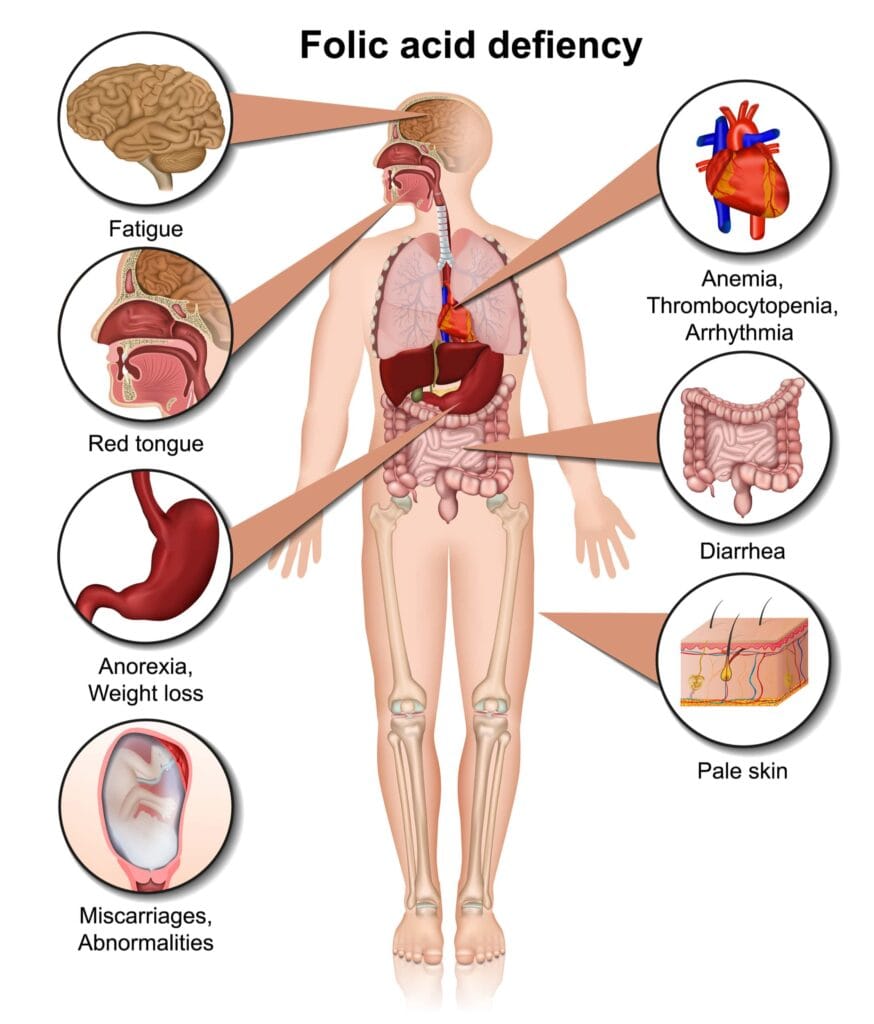
Symptoms of Folate Deficiency
Folate deficiency can be subtle at first. Common symptoms include:
- Persistent fatigue
- Pale skin
- Shortness of breath
- Mouth sores or tongue soreness
- Irritability or mood changes
- Megaloblastic anaemia
- In pregnancy: increased risk of neural tube defects
Because symptoms overlap with iron and B12 deficiency, blood tests are essential for accurate diagnosis.
What BOMSS Guidelines Recommend About Folate
The BOMSS guidelines provide clear, evidence‑based recommendations for monitoring and preventing folate deficiency after bariatric surgery:
Routine Monitoring
BOMSS recommends regular testing of:
- Folate
- Vitamin B12
- Ferritin
- Full blood count
This is because deficiencies can mask each other.
Daily Folate Supplementation
BOMSS recommends 400–800 mcg of folic acid (or equivalent) daily as part of a complete bariatric multivitamin.
Check B12 Before Supplementing Folate
Because folate can mask B12 deficiency, BOMSS stresses the importance of checking haematinics before adjusting supplements.
Pregnancy Considerations
Folate needs increase in pregnancy, and BOMSS advises additional supplementation for women trying to conceive or already pregnant.
How Bariboost Helps Prevent Folate Deficiency
The Bariboost Bariatric Multivitamin is specifically designed for post‑bariatric patients and aligns closely with BOMSS recommendations. It includes several features that make it particularly effective for preventing folate deficiency.
Bariboost Uses 5‑MTHF — the Natural, Active Form of Folate
Unlike standard folic acid, Bariboost uses Calcium L‑5‑Methyltetrahydrofolate (5‑MTHF), the biologically active form of folate.
This offers major advantages:
Better Absorption After Bariatric Surgery
5‑MTHF does not require conversion in the gut or liver, making it more reliable when digestion is altered.
Bypasses MTHFR Genetic Variants
Up to 40% of people have reduced ability to convert folic acid due to MTHFR polymorphisms.
5‑MTHF bypasses this issue entirely.
Interacts With Fewer Medications
5‑MTHF is less affected by medications such as:
- Methotrexate
- Anticonvulsants
- Metformin
- Proton pump inhibitors
This makes it a safer long‑term option.
Lower Risk of Masking Vitamin B12 Deficiency
Unlike high‑dose folic acid, 5‑MTHF:
- Does not accumulate in the bloodstream
- Is less likely to hide the blood abnormalities caused by B12 deficiency
- Supports methylation pathways more naturally
This aligns with BOMSS concerns about neurological risk from masked B12 deficiency.
Provides 800 mcg of Folate (as 5‑MTHF)
Bariboost delivers 800 mcg, which sits at the upper end of the BOMSS‑recommended range — ideal for post‑operative needs.
Includes Complementary Haematinics
Folate works closely with other nutrients. Bariboost includes:
- Vitamin B12
- 50 mg iron
- 2 mg copper
- 20 mg zinc (maintaining the BOMSS‑recommended zinc:copper ratio)
Together, these support healthy blood formation and prevent overlapping deficiencies.
The UK’s most complete bariatric multivitamin
BOMSS‑Compliant Multivitamin Structure
Bariboost meets BOMSS criteria for a complete bariatric multivitamin, including:
- Iron
- Zinc
- Copper
- Folate (as 5‑MTHF)
- B12
This makes it suitable for long‑term daily use after gastric bypass or sleeve gastrectomy.
Post‑op patients often struggle with large tablets. Bariboost uses two small capsules per day, improving adherence and comfort.
Practical Plan to Prevent Folate Deficiency
Daily
Take a bariatric‑specific multivitamin containing 400–800 mcg folate — ideally in the form of 5‑MTHF.
Every 6–12 Months
Have blood tests for:
- Folate
- Vitamin B12
- Ferritin
- Full blood count
If Pregnant or Planning Pregnancy
Discuss folate needs with your bariatric team — requirements may be higher.
Report Symptoms Early
Fatigue, breathlessness, or mouth sores should prompt testing.
Final Thoughts
Folate deficiency is common but highly preventable after bariatric surgery.
With:
- Regular monitoring,
- A BOMSS‑compliant multivitamin, and
- Advanced folate support like Bariboost’s 5‑MTHF,
you can protect your long‑term health, energy levels, and neurological function.