

Vitamin C and iron work closely together in the body. Understanding the relationship between vitamin c and iron absorption can help you prevent iron deficiency, improve energy levels, and get the most from the foods or supplements you take. This guide explains how vitamin C affects iron absorption.
Why Iron Is Important for Your Health
Iron is an essential mineral your body needs to make haemoglobin, the protein in red blood cells that carries oxygen around your body. Without enough iron, tissues don’t get the oxygen they need, which can lead to symptoms such as tiredness, weakness, pale skin, headaches, and shortness of breath. Long‑term iron deficiency can cause iron‑deficiency anaemia.
The Two Types of Iron in Food
Iron in food comes in two main forms:
- Heme iron – found in animal products such as red meat, poultry, and fish. This form is well absorbed by the body.
- Non‑heme iron – found in plant-based foods such as beans, lentils, spinach, fortified cereals, nuts, and seeds. This form is absorbed less efficiently and is more affected by other foods you eat at the same time.
This is where vitamin C becomes especially important.
How Vitamin C Improves Iron Absorption
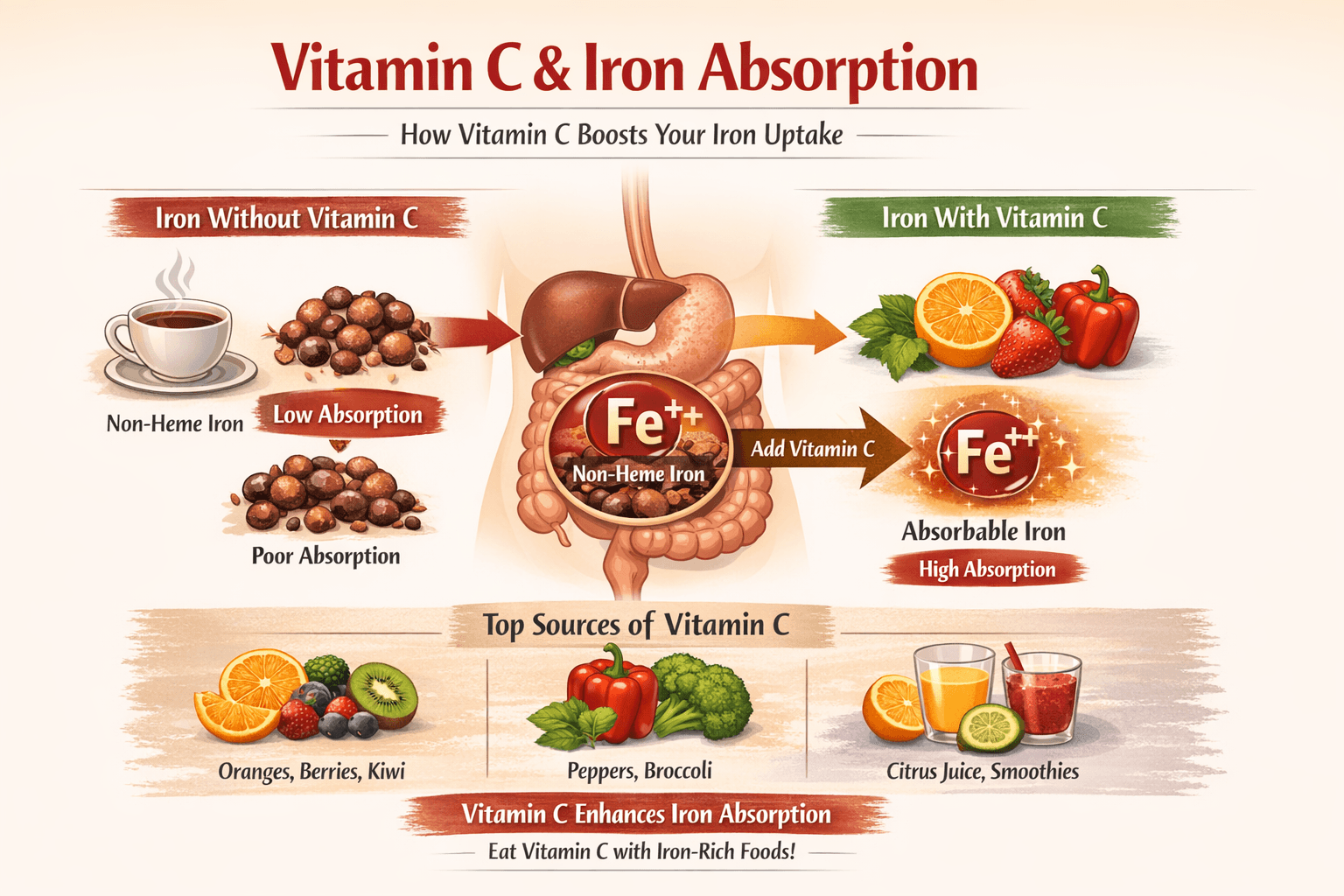
Vitamin C (also known as ascorbic acid) significantly increases the absorption of non‑heme iron. It does this in two main ways:
- Converting iron into a form your body can absorb
Non‑heme iron is often present as ferric iron (Fe³⁺), which is poorly absorbed. Vitamin C reduces it to ferrous iron (Fe²⁺), a form that is much easier for your intestines to absorb. - Protecting iron from absorption blockers
Certain substances in foods—such as phytates (in whole grains and legumes) and polyphenols (in tea and coffee)—can block iron absorption. Vitamin C binds to iron and helps keep it soluble, counteracting these inhibitors.
Short-term studies consistently show that adding vitamin C to a meal can significantly increase non‑heme iron absorption.
Does Everyone Need to Take Vitamin C with Iron?
Not necessarily. While vitamin C clearly improves non‑heme iron absorption, large clinical trials show that routine vitamin C supplementation alongside iron tablets may not always lead to better haemoglobin levels in people already being treated for iron‑deficiency anaemia.
However, vitamin C is still very helpful for:
- People who eat mostly plant‑based diets
- Individuals with low iron intake from food
- Those who struggle with iron absorption due to dietary inhibitors
For many patients, getting vitamin C from foods rather than supplements is sufficient.
Foods High in Vitamin C
Including vitamin C‑rich foods with iron‑containing meals is an easy, natural way to support absorption:
- Citrus fruits (oranges, lemons, grapefruit)
- Berries (strawberries, blackcurrants)
- Kiwi
- Peppers (especially red peppers)
- Tomatoes
- Broccoli and Brussels sprouts
Even 50–100 mg of vitamin C (roughly one orange) can make a meaningful difference in iron absorption from a meal.
Foods and Drinks That Reduce Iron Absorption
Some foods and drinks can reduce how much iron you absorb when eaten at the same time:
- Tea and coffee (including herbal and green tea)
- Large amounts of calcium (milk, cheese, calcium supplements)
- Whole grains and legumes high in phytates, when eaten alone
Vitamin C can partly offset these effects, especially for non‑heme iron.
Practical Tips for Patients
- Take iron supplements with a glass of water or orange juice (if recommended by your clinician).
- Avoid tea or coffee within 1–2 hours of iron‑rich meals or supplements.
- Combine plant‑based iron foods with vegetables or fruit high in vitamin C.
- Do not start high‑dose vitamin C or iron supplements without medical advice.
The UK’s most complete bariatric multivitamin
Frequently Asked Questions (FAQ)
Does vitamin C help absorb iron from meat?
Not significantly. Heme iron from meat is already well absorbed. Vitamin C mainly helps with non‑heme iron from plant foods.
Should I always take vitamin C with iron tablets?
Not always. While vitamin C improves absorption, large studies show iron alone can be just as effective in treating iron‑deficiency anaemia for many adults. Follow your healthcare professional’s advice.
Can I get enough vitamin C from food instead of supplements?
Yes. Most people can meet their vitamin C needs through diet alone, and food‑based vitamin C is effective at enhancing iron absorption.
Does calcium cancel out iron absorption completely?
No. Normal dietary calcium has a modest effect, but large calcium supplements taken at the same time as iron may reduce absorption. Spacing them out is usually recommended.
Is too much vitamin C harmful?
High doses of vitamin C can cause stomach upset or diarrhoea and may interact with certain medical conditions. Always check with a healthcare professional before taking large doses.
Key Takeaway
Vitamin C plays an important role in helping your body absorb iron—especially iron from plant‑based foods. A balanced diet that combines iron‑rich foods with natural sources of vitamin C is often the safest and most effective approach for patients. If you have ongoing symptoms or concerns about iron levels, speak with your GP, pharmacist, or dietitian for personalised advice.