

Maintaining healthy iron levels is essential for energy, immunity, and overall wellbeing. But many people don’t realize that certain natural plant compounds—tannins and polyphenols—can significantly influence how much iron your body absorbs. These compounds are abundant in everyday foods and drinks like tea, coffee, wine, legumes, and grains, making it important to understand their effects.
What Are Tannins and Polyphenols?
Polyphenols are a large family of antioxidant compounds found in plants. Tannins are a subgroup of polyphenols known for their bitter, astringent taste—most famously in black tea, red wine, and some fruits.
While these compounds offer health benefits (like antioxidant and anti‑inflammatory effects), they also have a strong ability to bind minerals, especially non‑heme iron (the type found in plant foods).
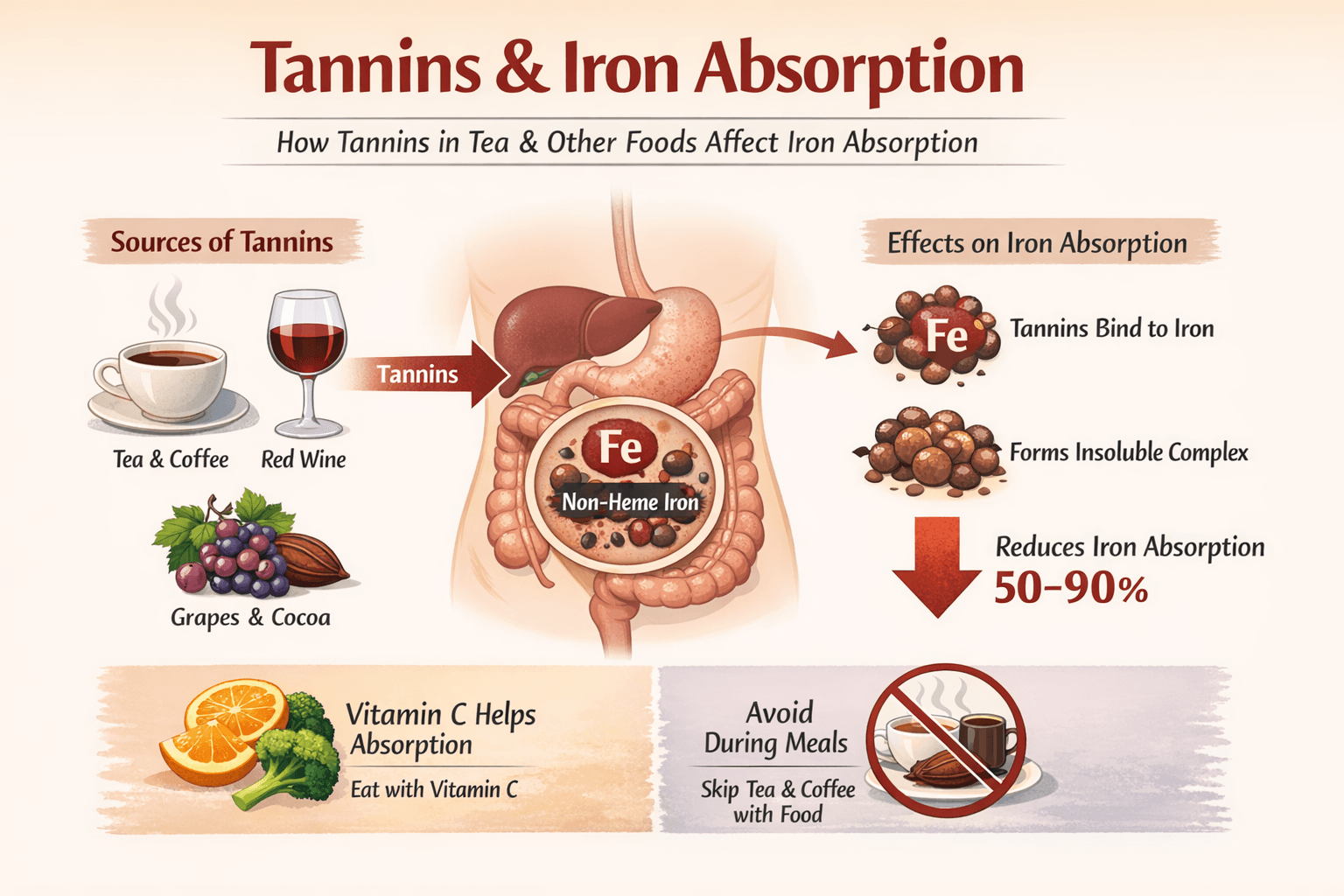
How Tannins and Polyphenols Reduce Iron Absorption
1. They form insoluble complexes with iron
The landmark study published in the British Journal of Nutrition demonstrated that polyphenol‑rich beverages—including tea, coffee, cocoa, and herbal infusions—significantly inhibit non‑heme iron absorption by forming complexes the body cannot absorb.
2. The effect is dose‑dependent
Research shows that even moderate amounts of polyphenols can sharply reduce iron uptake. The Cambridge study found that beverages containing 100–400 mg of polyphenols reduced iron absorption by 60–90%, depending on concentration.
3. Tannins are especially potent
Tannins—particularly those in black tea—are among the strongest inhibitors. A PubMed‑indexed human study found that tannic acid and tea tannins dramatically lowered iron absorption in controlled meal settings.
4. Not all polyphenols behave the same
Different polyphenol structures vary in their ability to bind iron, with some forming stronger complexes than others.
Short‑Term vs. Long‑Term Effects
Short‑term (single‑meal) studies
These consistently show large reductions in iron absorption when tannins or polyphenols are consumed with meals. This is why tea or coffee with food can be problematic for people with low iron.
Long‑term studies
Interestingly, long‑term research—including the PubMed study—suggests the body may adapt over time, meaning the real‑world impact on iron status may be less severe than short‑term studies imply.
This doesn’t mean the effect disappears—but it may be moderated by dietary patterns, vitamin C intake, and overall iron status.
How to Reduce the Impact on Iron Absorption
You don’t need to avoid tannin‑rich foods entirely. Instead, use these evidence‑based strategies:
1. Drink tea and coffee away from meals
Studies consistently show that consuming these beverages between meals dramatically reduces their inhibitory effect.
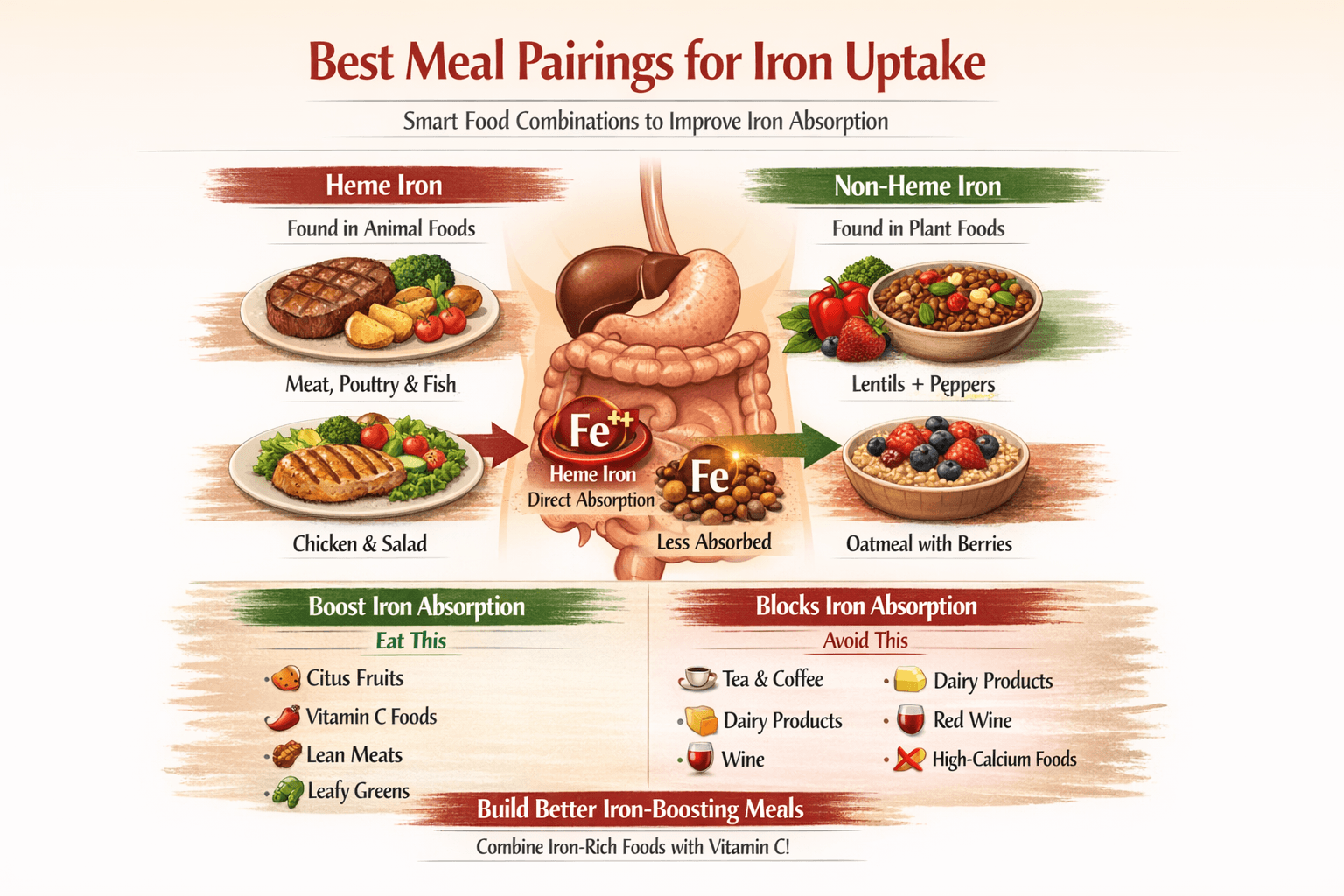
2. Add vitamin C to meals
Vitamin C can counteract polyphenol‑iron binding, restoring absorption. Citrus fruits, peppers, tomatoes, and berries are excellent choices.
3. Include heme iron sources
Meat, poultry, and fish contain heme iron, which is not affected by tannins and can even enhance non‑heme iron absorption.
4. Be mindful if you’re at risk of deficiency
Vegetarians, vegans, menstruating women, pregnant individuals, people who have had bariatric surgery and people with malabsorption issues should pay particular attention to timing.
Summary
- Tannins and polyphenols significantly inhibit non‑heme iron absorption, especially when consumed with meals.
- Tea and coffee are major contributors due to their high tannin content.
- Vitamin C and heme iron can offset the inhibitory effects.
- Long‑term effects may be less severe, but individuals with low iron should still be cautious.
- Timing matters more than total intake—separating tea/coffee from meals is highly effective.